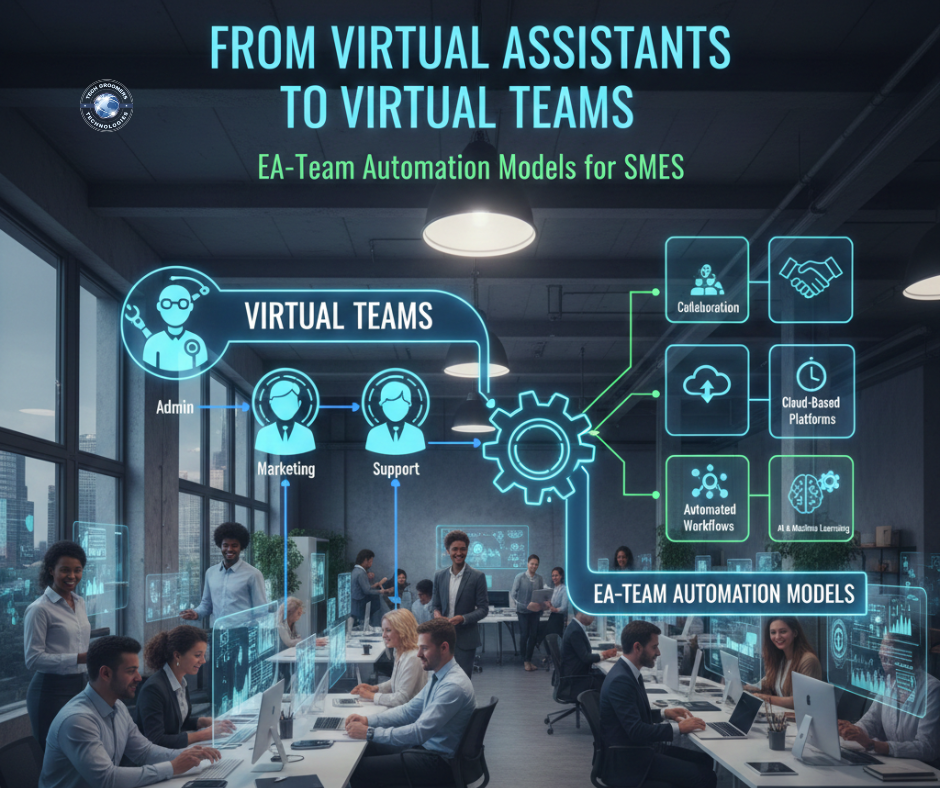

Small and medium-sized enterprises (SMEs) are under constant pressure to do more with fewer resources. Rising operational costs, talent shortages, and increasing customer expectations have pushed businesses to rethink how work gets done. While virtual assistants (VAs) were once the go-to solution for task delegation, 2026 marks a major shift toward something far more powerful: EA-Team Automation Models.
Instead of relying on a single virtual assistant, SMEs are now adopting AI-powered virtual teams—intelligent, collaborative systems that automate entire workflows across departments. This transformation is redefining productivity, scalability, and business efficiency.
What Is an EA-Team Automation Model?
An EA-Team (Enterprise Automation Team) model is a coordinated group of AI agents, virtual assistants, and automation tools working together as a digital workforce. Each agent has a specific role—just like a human team—but they operate autonomously, communicate with each other, and integrate with business software.
Unlike traditional VAs who handle isolated tasks, EA-Teams manage end-to-end processes such as sales pipelines, customer support, marketing execution, finance operations, and internal administration.
Why Virtual Assistants Are No Longer Enough
Virtual assistants brought flexibility and cost savings, but they come with limitations:
- Dependence on human availability
- Inconsistent performance
- Limited scalability
- Manual supervision required
- Task-based, not workflow-based execution
As SMEs grow, managing multiple VAs becomes complex and inefficient. This is where EA-Team automation steps in.
The Rise of Virtual Teams Powered by AI
Virtual teams are built on AI agents, workflow automation engines, and integrated business platforms. These teams don’t just assist—they operate.
Key characteristics of virtual AI teams:
- Autonomous task execution
- Cross-platform integration (CRM, ERP, POS, HR tools)
- Real-time decision-making
- Continuous learning and optimization
- 24/7 availability
For SMEs, this means enterprise-level automation without enterprise-level costs.
Core Components of an EA-Team Automation Model
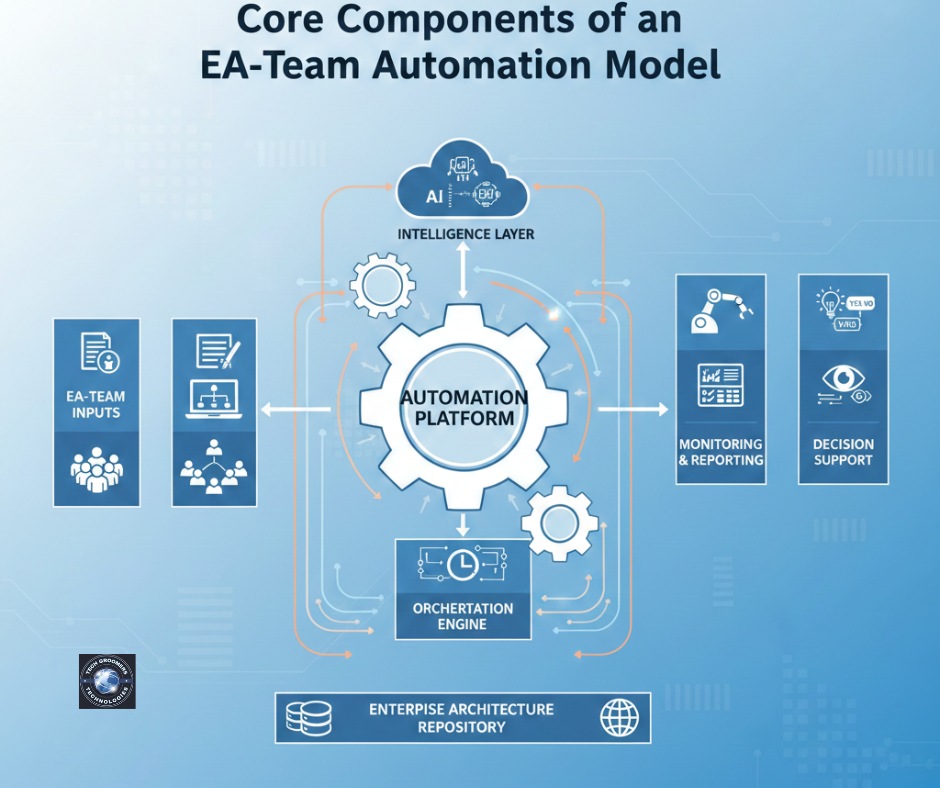
1. AI Executive Assistant
Acts as the coordinator of the virtual team:
- Assigns tasks to other agents
- Tracks workflow status
- Generates performance reports
- Alerts management when needed
2. AI Sales & CRM Agent
Handles sales operations by:
- Capturing and qualifying leads
- Updating CRM automatically
- Sending follow-ups
- Scheduling calls or demos
- Forecasting sales trends
This agent ensures no lead is missed and no opportunity is delayed.
3. AI Customer Support Agent
Manages customer interactions across channels:
- Live chat, email, WhatsApp, voice
- Ticket creation and routing
- Automated issue resolution
- Escalation to humans when required
Customers get instant support—without increasing headcount.
4. AI Marketing Agent
Executes marketing campaigns autonomously:
- Content scheduling
- Email marketing
- Ad performance optimization
- Social media posting
- A/B testing
Marketing becomes data-driven and self-optimizing.
5. AI Finance & Operations Agent
Supports internal operations by:
- Invoice processing
- Expense tracking
- Payroll validation
- Inventory updates
- ERP synchronization
This reduces errors and ensures compliance.
Why SMEs Are Adopting EA-Team Models in 2026
1. Cost Efficiency Without Compromising Scale
Hiring a full human team is expensive. EA-Teams provide:
- Lower operational costs
- No salaries, sick leaves, or turnover
- Instant scalability during peak demand
2. Faster Execution & Decision-Making
AI teams operate in real time. Tasks that once took days are completed in minutes—without delays or bottlenecks.
3. Seamless Integration with Business Tools
EA-Teams integrate with:
- CRM systems
- ERP platforms
- POS software
- Accounting tools
- Marketing platforms
Everything stays synchronized automatically.
4. Reduced Human Error
AI agents follow predefined rules and learn from data, minimizing mistakes in data entry, reporting, and communication.
5. Always-On Productivity
Virtual teams work 24/7 across time zones, giving SMEs a global operational advantage.
Use Cases Across Industries
EA-Team automation models are transforming multiple sectors:
- E-commerce: Order management, inventory updates, customer support
- Real estate: Lead handling, booking coordination, follow-ups
- Healthcare: Appointment scheduling, reminders, billing automation
- Automotive: CRM updates, lead nurturing, service booking
- Retail: POS integration, stock tracking, customer engagement
How SMEs Can Transition from VAs to EA-Teams
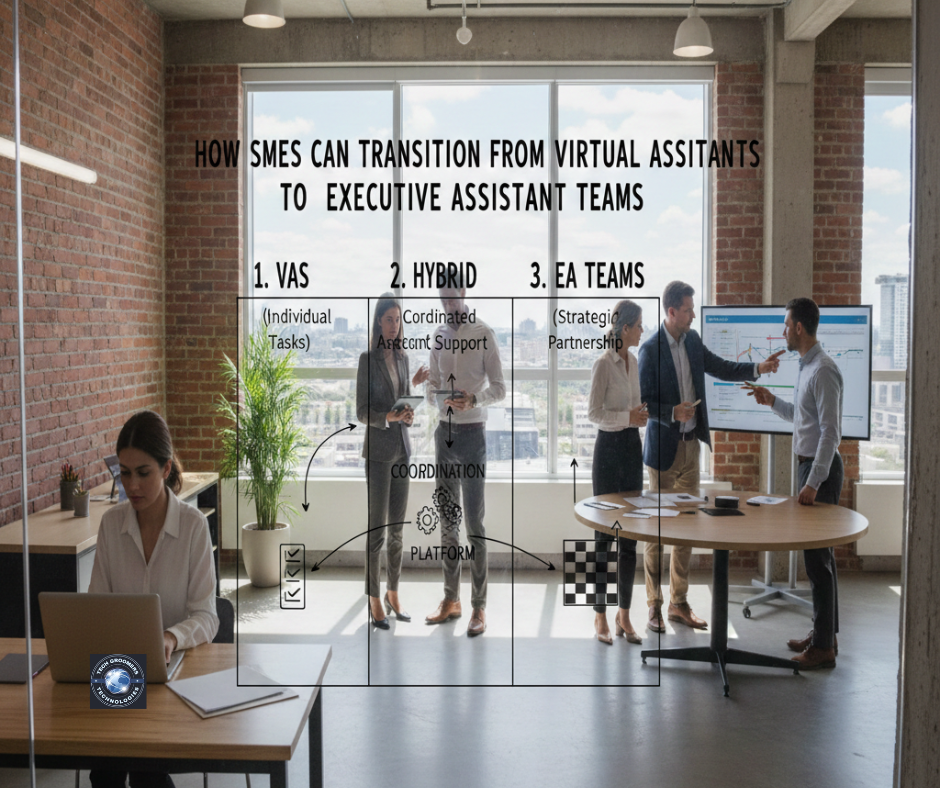
Step 1: Identify Repetitive Workflows
Start with tasks that consume the most time and resources.
Step 2: Implement Modular AI Agents
Deploy agents gradually—sales first, then support, then operations.
Step 3: Integrate Core Systems
Ensure CRM, ERP, and communication tools are connected.
Step 4: Monitor & Optimize
Track performance, refine workflows, and let AI learn.
The Future: Autonomous Digital Organizations
The evolution from virtual assistants to virtual teams is not just a trend—it’s a structural shift in how SMEs operate. By 2027, many small businesses will function as AI-first organizations, where human teams focus on strategy and creativity while EA-Teams handle execution.
Conclusion
EA-Team Automation Models represent the next phase of business efficiency for SMEs. By replacing isolated virtual assistants with coordinated AI-powered virtual teams, businesses gain:
- Higher productivity
- Lower costs
- Faster growth
- Better customer experiences
- Scalable operations
The future of work isn’t about hiring more people—it’s about building smarter digital teams.




Leave a Reply