

Customer support has always been the backbone of successful businesses. In today’s fast-paced digital world, customers expect instant responses, personalized service, and 24/7 availability. Traditional call centers, however, struggle with long wait times, high operational costs, agent burnout, and inconsistent service quality.
This is where AI virtual assistants are redefining the future of call centers. By automating routine interactions and supporting human agents, AI is transforming customer support into a faster, smarter, and more scalable operation.
What Are AI Virtual Assistants in Call Centers?
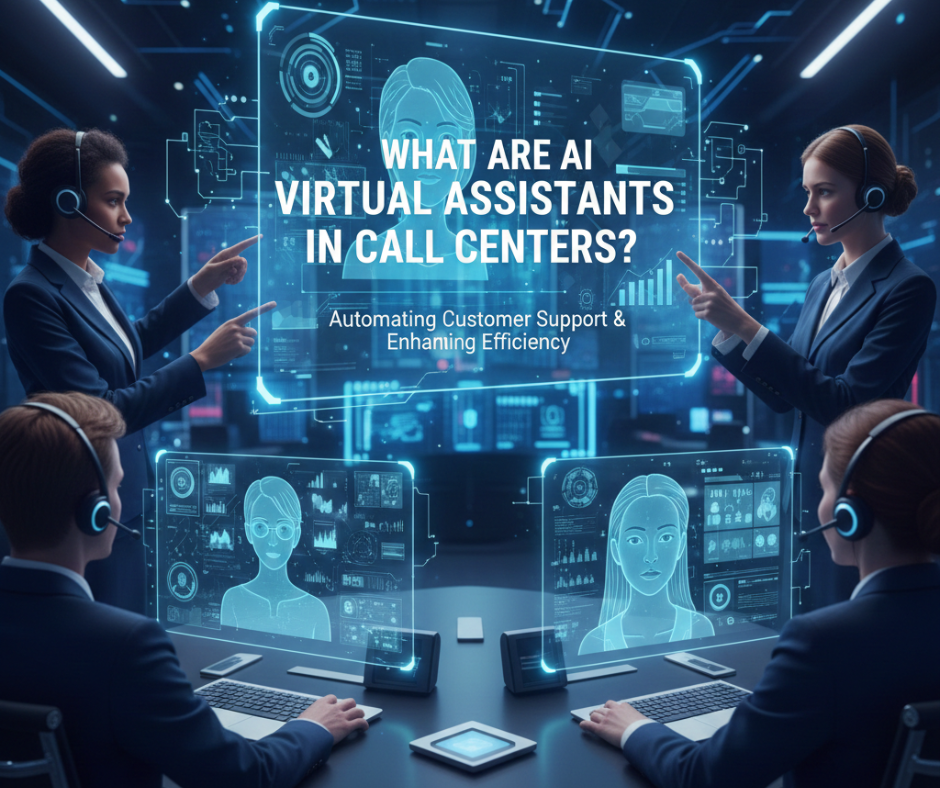
AI virtual assistants are intelligent, software-based agents powered by machine learning, natural language processing (NLP), and voice recognition. They can understand customer intent, respond in real time, and integrate seamlessly with CRM and ticketing systems.
Unlike traditional IVR systems, AI virtual assistants can:
- Hold natural conversations
- Understand context and sentiment
- Learn from previous interactions
- Resolve issues without human intervention
- Escalate complex cases to agents
Why Call Centers Need AI in 2026
Customer expectations are rising, while operational challenges continue to grow. Modern call centers face:
- Increasing call volumes
- Demand for 24/7 support
- Multilingual customer bases
- High agent turnover
- Rising operational costs
AI virtual assistants help address these challenges by enhancing efficiency and improving customer experience at scale.
1. Instant Responses and Reduced Wait Times
One of the biggest frustrations for customers is waiting on hold. AI virtual assistants handle thousands of conversations simultaneously, providing instant responses without queues.
Benefits include:
- Faster issue resolution
- Lower call abandonment rates
- Higher customer satisfaction
Customers get answers immediately, even during peak hours.
2. 24/7 Customer Support Without Extra Costs
AI virtual assistants work around the clock without breaks, shifts, or overtime. Businesses can offer 24/7 support without significantly increasing costs.
This is especially valuable for:
- Global businesses
- E-commerce platforms
- SaaS companies
- Emergency or critical support services
3. Automating Repetitive Support Tasks
A large percentage of call center interactions involve repetitive queries such as:
- Order status checks
- Account updates
- Password resets
- Billing inquiries
- Appointment confirmations
AI virtual assistants can fully automate these tasks, allowing human agents to focus on complex and high-value interactions.
4. AI-Powered Voice and Chat Support
Modern AI assistants support both voice and chat channels, creating a seamless omnichannel experience. Customers can switch between phone calls, chat, or messaging apps without losing context.
Voice-enabled AI assistants use speech recognition and NLP to deliver natural, human-like conversations over phone calls.
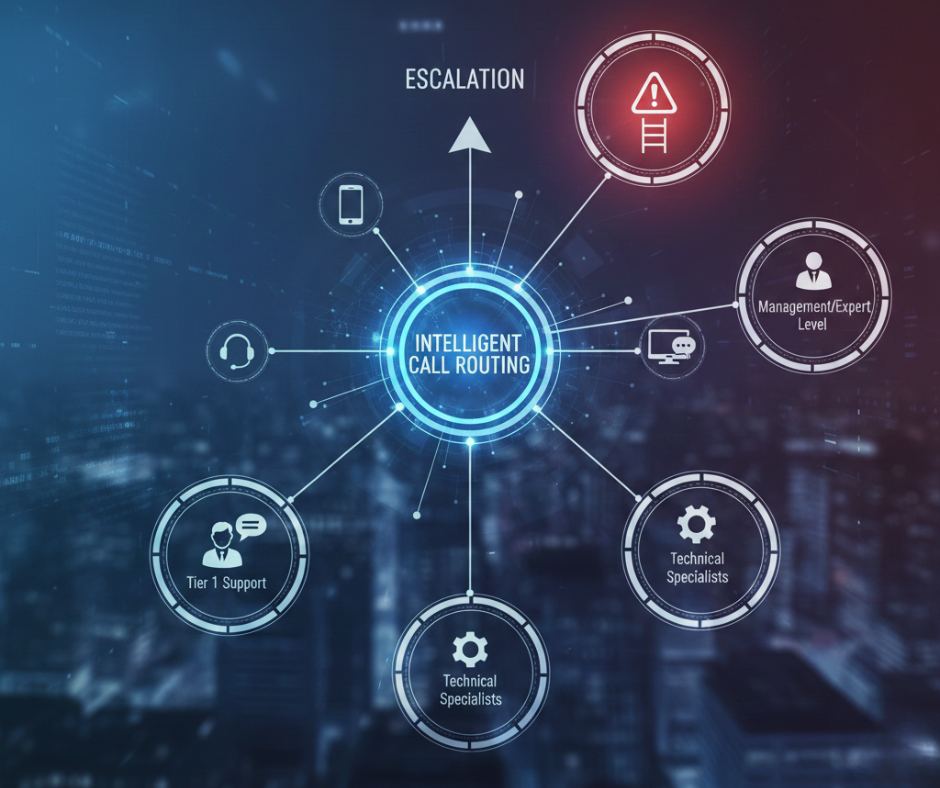
5. Intelligent Call Routing and Escalation
When human intervention is required, AI assists by:
- Understanding customer intent
- Identifying issue urgency
- Routing calls to the most suitable agent
- Providing agents with conversation history and suggested responses
This reduces handling time and improves first-call resolution rates.
6. Personalized Customer Interactions
AI virtual assistants integrate with CRM systems to access customer profiles, purchase history, and previous interactions.
This enables:
- Personalized greetings
- Context-aware responses
- Relevant recommendations
- Faster issue resolution
Personalization builds trust and enhances customer loyalty.
7. Multilingual and Global Support
AI assistants can communicate in multiple languages, making it easier for businesses to support international customers without hiring multilingual agents.
This ensures consistent service quality across regions and markets.
8. Real-Time Analytics and Performance Insights
AI virtual assistants continuously collect data from interactions, providing valuable insights such as:
- Common customer issues
- Peak call times
- Agent performance metrics
- Customer sentiment analysis
Managers can use these insights to optimize workflows and improve service quality.
9. Reduced Operational Costs and Agent Burnout
By handling routine interactions, AI significantly reduces the workload on human agents. This leads to:
- Lower staffing costs
- Reduced agent stress
- Higher employee retention
- Improved agent productivity
Human agents can focus on problem-solving and relationship-building instead of repetitive tasks.
10. The Future of Call Centers Is Human + AI
AI virtual assistants are not replacing human agents—they are augmenting them. The future call center is a hybrid model where AI handles automation and humans provide empathy, judgment, and complex problem-solving.
This collaboration results in:
- Better customer experiences
- Higher efficiency
- Scalable support operations
Conclusion
AI virtual assistants are revolutionizing customer support in call centers by delivering faster responses, reducing costs, and improving customer satisfaction. As customer expectations continue to rise, businesses that adopt AI-driven support solutions gain a significant competitive advantage.
In the modern customer service landscape, AI virtual assistants are no longer optional—they are essential for delivering high-quality, scalable, and future-ready customer support.



Leave a Reply