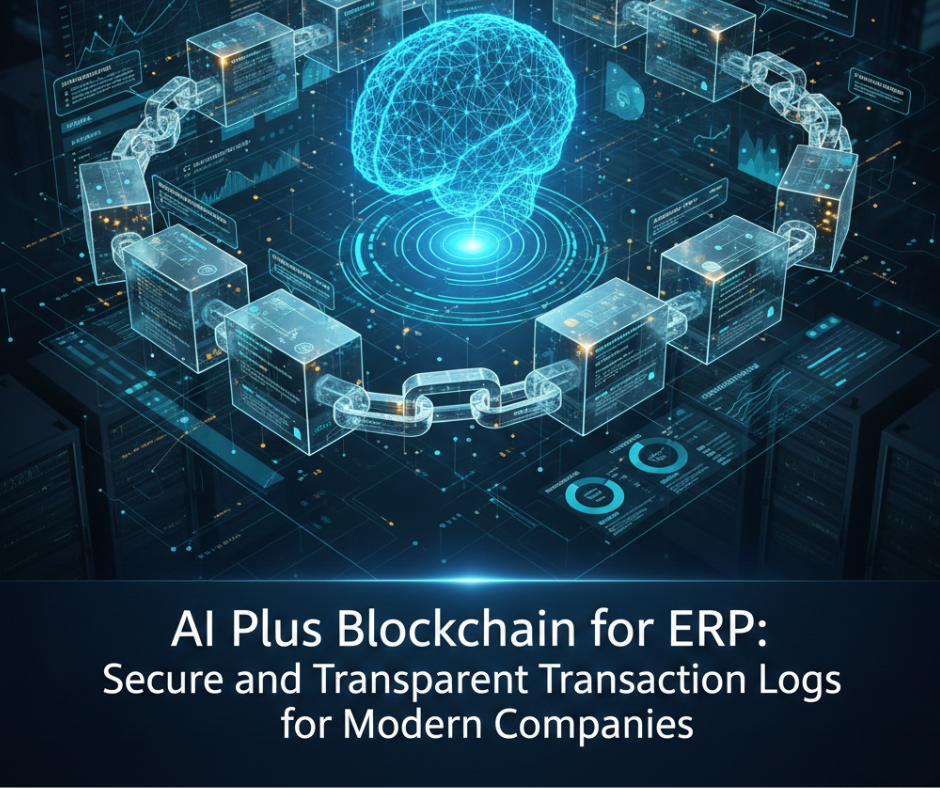

As businesses become increasingly digital, trust, security, and transparency are no longer optional—they are critical. Modern companies rely heavily on ERP (Enterprise Resource Planning) systems to manage finance, supply chains, operations, HR, and customer data. However, traditional ERP systems often struggle with data tampering risks, lack of transparency, and audit complexities.
This is where the powerful combination of Artificial Intelligence (AI) and Blockchain technology is transforming ERP platforms. Together, they create secure, intelligent, and tamper-proof transaction systems that redefine how businesses manage and trust their data.
In this blog, we explore how AI + Blockchain-powered ERP systems are shaping the future of enterprise operations.
Understanding the AI + Blockchain ERP Model
An AI-powered ERP analyzes data, predicts trends, automates workflows, and supports smarter decision-making.
A Blockchain-powered ERP ensures that every transaction is recorded in an immutable, decentralized ledger.
When combined, they deliver:
- Intelligent automation (AI)
- Tamper-proof records (Blockchain)
- Real-time validation
- Transparent audit trails
- Enhanced trust across departments and partners
Why Traditional ERP Systems Need an Upgrade
Traditional ERP platforms face several challenges:
- Data manipulation risks
- Centralized databases vulnerable to breaches
- Manual audits and compliance checks
- Limited transaction transparency
- Difficulty tracking historical changes
AI and Blockchain together eliminate these weaknesses by adding intelligence, automation, and trust at every level.
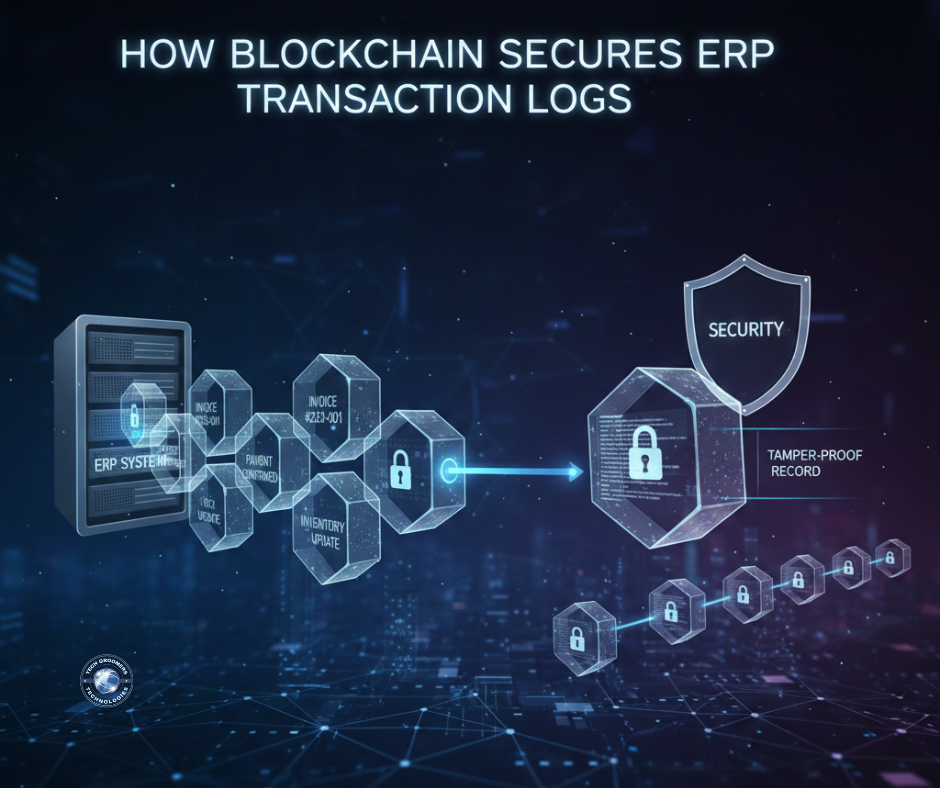
How Blockchain Secures ERP Transaction Logs
Blockchain records ERP transactions as immutable blocks, ensuring:
🔹 Tamper-Proof Records
Once a transaction is logged, it cannot be altered or deleted—preventing fraud and unauthorized changes.
🔹 Decentralized Verification
Multiple nodes validate transactions, reducing the risk of internal manipulation.
🔹 Complete Transparency
Every authorized stakeholder can trace transactions from origin to completion.
🔹 Real-Time Auditing
Auditors and compliance teams can verify records instantly without manual reconciliation.
Role of AI in Blockchain-Based ERP Systems
While Blockchain ensures security, AI adds intelligence and automation.
AI enables ERP systems to:
- Detect fraudulent patterns in real time
- Analyze transaction anomalies
- Predict operational risks
- Optimize workflows automatically
- Generate actionable insights from ERP data
Together, AI and Blockchain create self-monitoring, self-optimizing ERP ecosystems.
Key Use Cases of AI + Blockchain ERP Integration
1. Financial Transactions & Accounting
- Immutable invoice and payment records
- AI-driven fraud detection
- Automated reconciliation
- Real-time compliance monitoring
2. Supply Chain Transparency
- Track goods from suppliers to customers
- Verify product authenticity
- AI-powered demand forecasting
- Eliminate disputes and counterfeit risks
3. Human Resources & Payroll
- Secure employee records
- Transparent payroll processing
- Immutable attendance logs
- AI-driven workforce analytics
4. Procurement & Vendor Management
- Smart contracts for automated purchasing
- Transparent vendor transactions
- AI-based supplier performance scoring
Benefits for Modern Companies
✅ Enhanced Data Security
Blockchain prevents unauthorized changes, while AI monitors threats continuously.
✅ Regulatory Compliance Made Easy
Immutable logs simplify audits and meet compliance standards (GDPR, ISO, SOC, etc.).
✅ Reduced Fraud & Errors
AI detects anomalies instantly; Blockchain prevents tampering.
✅ Operational Transparency
Every transaction is traceable and verifiable across departments.
✅ Improved Decision-Making
AI transforms ERP data into predictive insights for strategic planning.
Why This Matters in 2026 and Beyond
With increasing cyber threats, regulatory pressure, and global operations, companies need ERP systems that go beyond basic automation.
AI + Blockchain ERP solutions provide:
- Trust-driven digital operations
- Scalable security models
- Real-time intelligence
- Future-ready infrastructure
By 2026, organizations that adopt this dual technology will outperform competitors still relying on legacy ERP systems.
Implementation Strategy for Businesses
To successfully implement AI + Blockchain ERP:
- Identify high-risk transaction areas
- Integrate blockchain layers into existing ERP modules
- Deploy AI for monitoring, analytics, and automation
- Define access permissions and governance models
- Continuously train AI models for improved accuracy
Conclusion
The fusion of AI and Blockchain is revolutionizing ERP systems by delivering secure, transparent, and intelligent transaction management. Modern companies no longer have to choose between automation and trust—they can have both.
As digital transformation accelerates, AI + Blockchain-powered ERP systems will become the gold standard for enterprises that value security, transparency, and long-term growth.



Leave a Reply