

Digital transformation is no longer a future goal—it’s a business necessity. Organizations across industries are realizing that traditional ERP and CRM systems, even cloud-based ones, are no longer enough to support modern demands for speed, personalization, and intelligent decision-making. This has led to a major shift toward AI-native ERP and CRM platforms.
However, migrating to AI-native systems requires more than just a software upgrade. It demands a well-structured roadmap that aligns technology, people, and processes. This guide outlines a complete, step-by-step digital transformation roadmap to help businesses successfully migrate to AI-driven ERP and CRM systems.
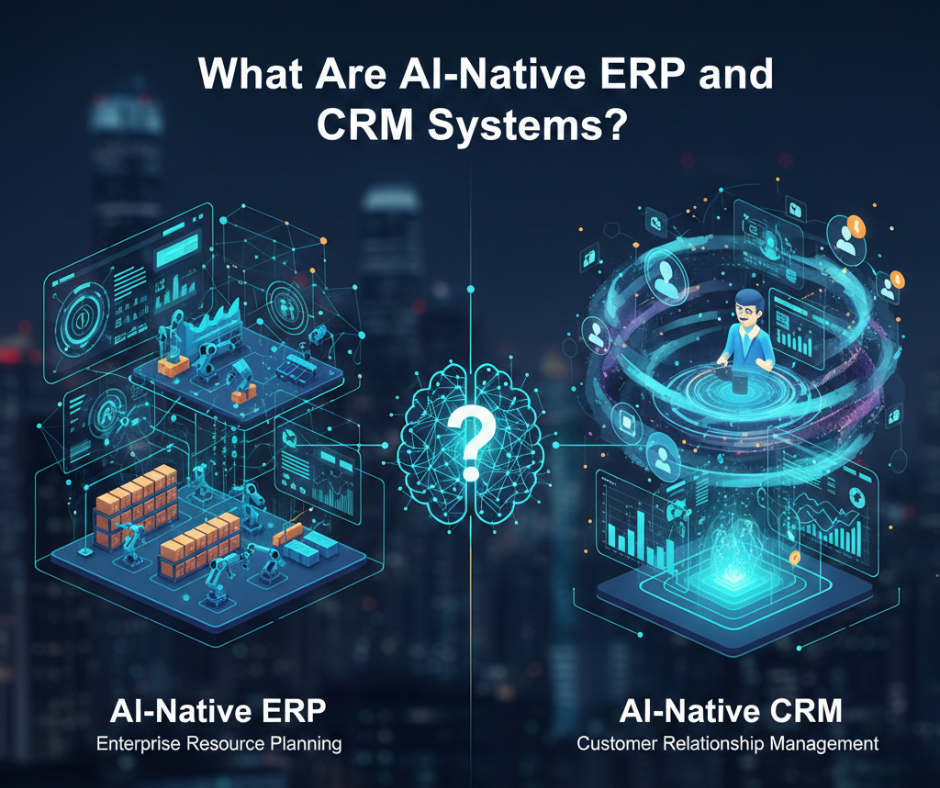
What Are AI-Native ERP and CRM Systems?
AI-native ERP and CRM systems are built with artificial intelligence at their core—not as an add-on. These platforms use:
- Machine learning for predictions and recommendations
- Automation for workflows and decision-making
- Real-time analytics for operational visibility
- Natural language interfaces for usability
Unlike traditional systems, AI-native platforms continuously learn, adapt, and optimize business processes.
Why Businesses Are Moving to AI-Native Platforms
Organizations adopt AI-native ERP and CRM to:
- Eliminate manual processes
- Gain real-time insights
- Improve customer experiences
- Enhance operational agility
- Enable data-driven decisions at scale
The shift is not about technology alone—it’s about building a future-ready enterprise.
Phase 1: Strategic Assessment and Vision Alignment
Digital transformation starts with clarity.
Key Actions
- Evaluate existing ERP and CRM limitations
- Identify inefficiencies and bottlenecks
- Define clear business goals
- Align leadership and stakeholders
This phase ensures the transformation is driven by business outcomes—not just IT upgrades.
Phase 2: Data Readiness and Architecture Planning
AI systems rely heavily on data quality.
Key Actions
- Audit existing data sources
- Clean, standardize, and de-duplicate data
- Define data governance policies
- Design scalable cloud architecture
Strong data foundations are critical for successful AI adoption.
Phase 3: Process Re-Engineering and Automation Design
Migrating old processes into new systems limits transformation value.
Key Actions
- Redesign workflows for automation
- Eliminate redundant steps
- Standardize cross-department processes
- Identify AI-automation opportunities
This phase ensures AI enhances efficiency—not complexity.

Phase 4: Selecting the Right AI-Native ERP and CRM Platform
Choosing the right technology partner is critical.
Evaluation Criteria
- Built-in AI and automation capabilities
- Scalability and cloud-native design
- Integration flexibility
- Security and compliance readiness
- Industry-specific features
The platform should support both current needs and future growth.
Phase 5: Integration with Business Ecosystems
AI-native ERP and CRM systems must connect seamlessly with:
- E-commerce platforms
- Marketing automation tools
- Payment gateways
- IoT and analytics platforms
Smooth integration ensures end-to-end data flow and real-time visibility.
Phase 6: Migration and Phased Implementation
A phased approach minimizes disruption.
Key Actions
- Migrate data in controlled stages
- Pilot key modules first
- Run parallel systems during transition
- Validate outputs and performance
This reduces risk and ensures business continuity.
Phase 7: AI Model Training and Optimization
AI systems improve over time.
Key Actions
- Train AI models using historical and real-time data
- Continuously monitor predictions and recommendations
- Fine-tune automation rules
- Measure performance improvements
This phase unlocks the full potential of AI-native platforms.
Phase 8: Change Management and Workforce Enablement
Technology adoption fails without people adoption.
Key Actions
- Conduct role-based training programs
- Communicate benefits clearly
- Redefine job roles and responsibilities
- Encourage AI-assisted decision-making
Empowered employees accelerate transformation success.
Phase 9: Governance, Security, and Compliance
AI-native systems require strong governance.
Key Actions
- Implement role-based access control
- Monitor AI decision transparency
- Ensure regulatory compliance
- Maintain audit trails and data integrity
This builds trust and reduces operational risk.
Phase 10: Continuous Improvement and Innovation
Digital transformation is an ongoing journey.
Key Actions
- Monitor KPIs and AI performance metrics
- Identify new automation opportunities
- Integrate emerging AI capabilities
- Adapt to evolving business needs
AI-native ERP and CRM platforms evolve alongside the organization.

Key Benefits of AI-Native ERP and CRM Migration
Organizations that follow a structured roadmap achieve:
- Faster and smarter decision-making
- Reduced operational costs
- Improved customer engagement
- Enhanced scalability and resilience
- Stronger competitive advantage
Conclusion
Migrating to AI-native ERP and CRM systems is not a one-time project—it’s a strategic transformation that reshapes how businesses operate, compete, and grow. By following a clear, phased digital transformation roadmap, organizations can reduce risk, maximize ROI, and unlock the full power of AI.
In a world driven by data and intelligence, AI-native ERP and CRM platforms are the foundation of future-ready enterprises.




Leave a Reply