

The e-commerce industry has become fiercely competitive. Customers no longer settle for generic product recommendations or one-size-fits-all marketing. They expect personalized shopping experiences, instant responses, and relevant offers at every touchpoint.
This is where AI-powered CRM systems for e-commerce are transforming the game. By combining artificial intelligence with customer relationship management, businesses can deliver tailored experiences at scale—without increasing manual workload.
In this blog, we’ll explore how AI CRM is reshaping e-commerce, why it’s essential in 2026, and how it helps brands boost conversions, loyalty, and revenue.
What Is AI CRM in E-Commerce?
An AI-powered CRM uses machine learning, predictive analytics, and automation to analyze customer behavior, preferences, and buying patterns across all digital touchpoints.
Unlike traditional CRMs that simply store data, AI CRMs:
- Interpret customer behavior in real time
- Predict future actions
- Automate engagement
- Personalize experiences across web, email, mobile, and social channels
For e-commerce businesses, this means smarter selling and deeper customer relationships.
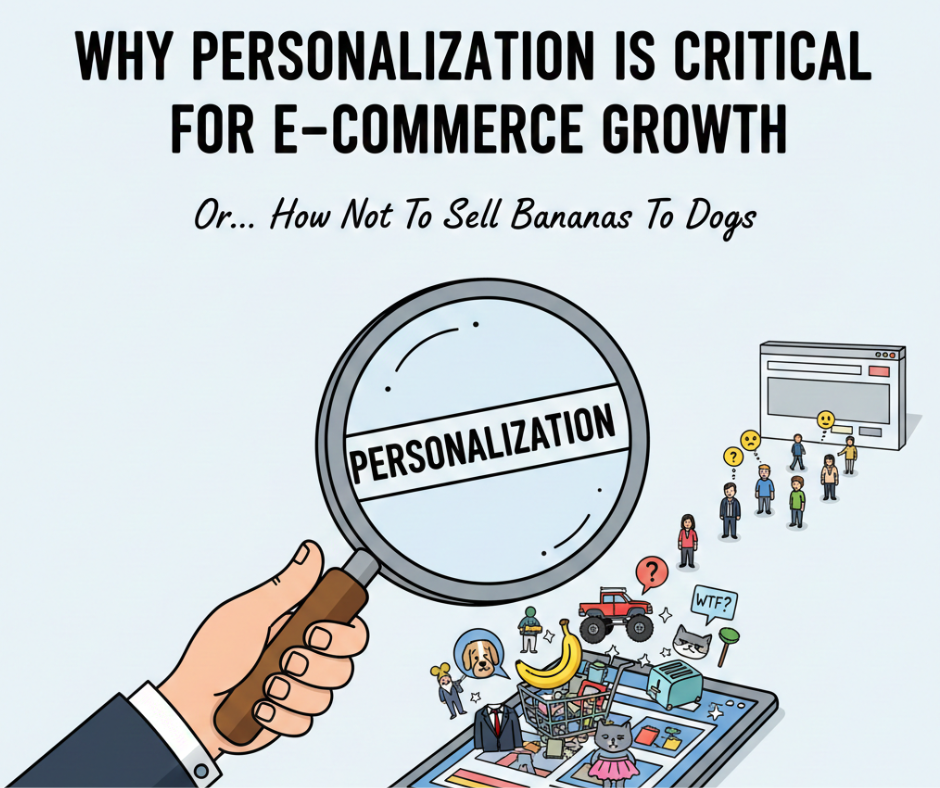
Why Personalization Is Critical for E-Commerce Growth
Modern online shoppers expect:
- Relevant product recommendations
- Personalized offers
- Fast, accurate customer support
- Consistent experiences across devices
AI CRM enables brands to meet these expectations at scale, even with thousands or millions of customers.
1. Hyper-Personalized Product Recommendations
AI analyzes:
- Browsing history
- Purchase behavior
- Search patterns
- Cart activity
- Customer demographics
Using this data, AI CRM delivers real-time product recommendations tailored to each shopper. This significantly increases:
✔ Conversion rates
✔ Average order value
✔ Customer satisfaction
2. Smarter Customer Segmentation
Traditional segmentation relies on basic rules like age or location. AI CRM goes further by creating dynamic segments based on behavior and intent.
AI segments customers by:
- Purchase likelihood
- Price sensitivity
- Brand loyalty
- Browsing frequency
- Engagement history
This allows e-commerce brands to send highly targeted campaigns that convert better.
3. Predictive Buying Behavior
AI CRM doesn’t just react—it predicts.
It can forecast:
- When a customer is likely to buy again
- Which products they’ll be interested in
- When a customer is about to churn
With predictive insights, businesses can send timely offers, reminders, and incentives before opportunities are lost.
4. AI-Powered Marketing Automation
AI CRM automates:
- Email campaigns
- Abandoned cart recovery
- Personalized discounts
- Push notifications
- Loyalty rewards
The system learns what works best for each customer and continuously optimizes campaigns for higher ROI.
5. Omnichannel Customer Experience
E-commerce customers interact across multiple platforms—website, mobile apps, social media, chat, and email.
AI CRM ensures:
✔ Consistent messaging
✔ Unified customer profiles
✔ Seamless journey across channels
Whether a customer browses on mobile and buys on desktop, AI CRM tracks and personalizes the experience end-to-end.
6. AI Chatbots and Virtual Assistants
AI-powered chatbots integrated with CRM can:
- Answer product questions instantly
- Recommend products
- Track orders
- Handle returns
- Upsell and cross-sell
This improves customer support availability while reducing operational costs.
7. Improved Customer Retention and Loyalty
Acquiring new customers is expensive. AI CRM focuses on retention by:
- Identifying loyal customers
- Predicting churn risks
- Offering personalized loyalty rewards
- Re-engaging inactive shoppers
Personalized experiences build trust and long-term relationships.
8. Real-Time Analytics and Insights
AI CRM provides real-time dashboards showing:
- Customer lifetime value
- Campaign performance
- Sales trends
- Product popularity
- Customer sentiment
These insights help e-commerce businesses make faster, data-driven decisions.
9. Scalability for Growing E-Commerce Brands
As businesses scale, manual personalization becomes impossible. AI CRM scales effortlessly—handling thousands of customers with the same level of personalization as a small boutique store.
This makes AI CRM ideal for:
- Startups
- Growing e-commerce brands
- Enterprise-level marketplaces
10. Competitive Advantage in 2026 and Beyond
In 2026, personalization is no longer optional—it’s expected. Brands using AI CRM gain:
✔ Higher conversions
✔ Better customer insights
✔ Reduced churn
✔ Increased lifetime value
✔ Stronger brand loyalty
Those who fail to adopt AI-driven CRM risk falling behind competitors who deliver smarter, faster, and more relevant experiences.
Conclusion
AI CRM for e-commerce is revolutionizing how brands engage with customers. By delivering hyper-personalized shopping experiences at scale, AI CRM helps businesses boost sales, build loyalty, and stay competitive in a crowded market.
As customer expectations rise, the future of e-commerce belongs to brands that understand their customers deeply—and AI CRM is the key to making that happen.




Leave a Reply