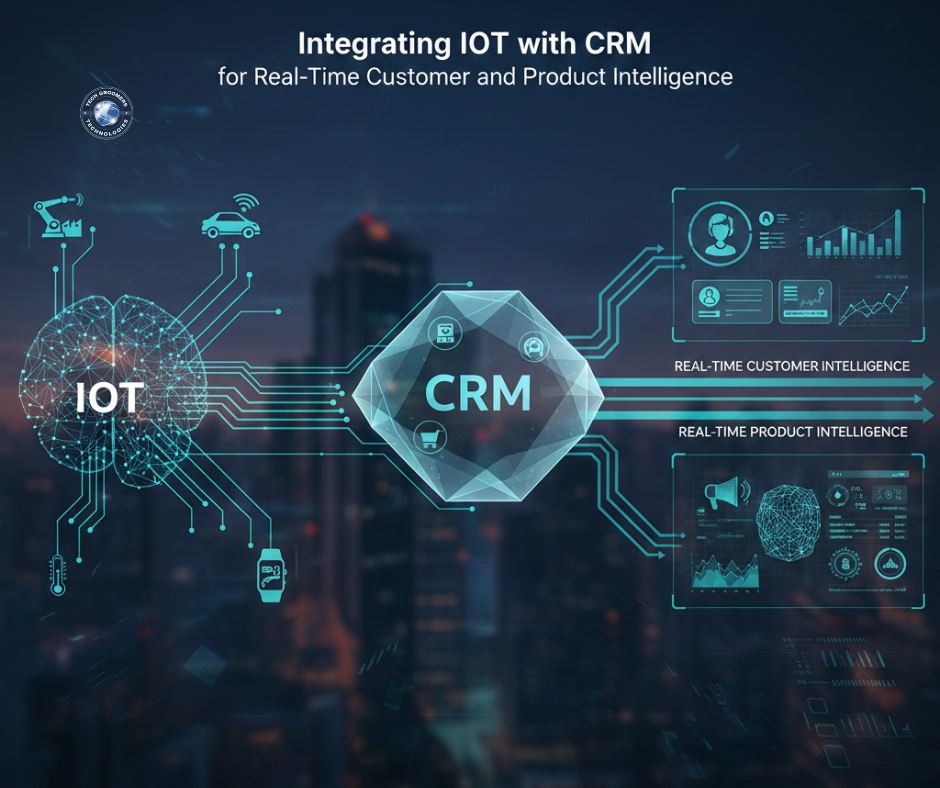

As customer expectations rise and competition intensifies, businesses can no longer rely on static data or delayed insights. Modern customers expect personalized experiences, instant responses, and proactive service. This is where the powerful combination of IoT (Internet of Things) and CRM (Customer Relationship Management) comes into play.
By integrating IoT with CRM systems, businesses gain real-time customer and product intelligence, enabling smarter decisions, faster responses, and stronger customer relationships. This integration is rapidly becoming a strategic necessity across industries such as retail, manufacturing, healthcare, automotive, logistics, and smart electronics.
What Is IoT-CRM Integration?
IoT-CRM integration connects data from smart devices, sensors, machines, and connected products directly into a CRM system. Instead of relying solely on manual inputs or customer interactions, the CRM now receives live data from the real world.
This allows businesses to:
- Monitor product usage in real time
- Understand customer behavior automatically
- Predict issues before customers report them
- Personalize communication based on actual usage
In short, CRM evolves from a reactive system into a real-time intelligence hub.
Why Real-Time Intelligence Matters in 2026 and Beyond
Traditional CRMs work on historical data—past purchases, previous tickets, old interactions. IoT changes this by feeding continuous, live data into the system.
With real-time intelligence, businesses can:
- Act instantly instead of reacting late
- Predict customer needs
- Reduce downtime and service delays
- Improve satisfaction and retention
In an era driven by speed and personalization, real-time data is a competitive advantage.
How IoT Enhances CRM Capabilities
1. Real-Time Customer Behavior Tracking
IoT devices capture how customers interact with products:
- How often a device is used
- Usage patterns and frequency
- Performance metrics
- Environmental conditions
This data flows directly into the CRM, creating a dynamic customer profile that updates automatically.
2. Proactive Customer Support & Service
One of the biggest benefits of IoT-CRM integration is predictive support.
AI-powered CRM systems can:
- Detect abnormal device behavior
- Predict potential failures
- Automatically create support tickets
- Notify service teams or customers in advance
This shifts customer support from reactive problem-solving to proactive service delivery.
3. Smarter Product Performance Insights
IoT provides granular product intelligence that helps businesses:
- Identify product design issues
- Monitor real-world performance
- Improve product quality
- Reduce warranty claims
CRM teams gain insights that were previously unavailable through customer feedback alone.
4. Personalized Marketing Based on Live Usage Data
With IoT data inside CRM, marketing becomes highly personalized.
Examples include:
- Sending usage-based offers
- Promoting relevant upgrades
- Triggering reminders when usage drops
- Suggesting accessories or add-ons
Marketing messages become context-aware, relevant, and timely—boosting conversion rates.
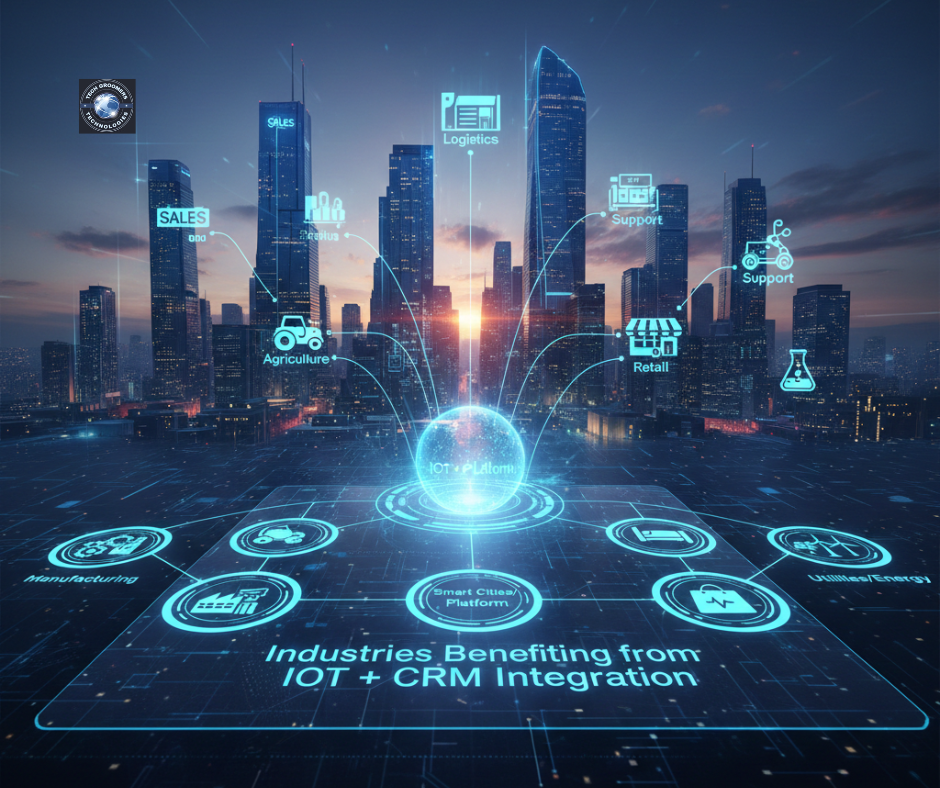
Industries Benefiting from IoT + CRM Integration
Retail & Smart Electronics
- Track product usage and lifecycle
- Offer proactive maintenance or upgrades
- Improve after-sales service
Manufacturing
- Monitor equipment performance
- Predict breakdowns
- Improve customer service for B2B clients
Automotive
- Track vehicle health
- Schedule maintenance automatically
- Improve dealership-customer communication
Healthcare & Medical Devices
- Monitor patient device usage
- Ensure compliance
- Improve patient engagement and outcomes
Logistics & Supply Chain
- Track shipments in real time
- Update customers automatically
- Improve delivery transparency
Key Benefits of IoT-Driven CRM Systems
✅ Real-Time Decision Making
✅ Improved Customer Experience
✅ Predictive Maintenance & Support
✅ Reduced Operational Costs
✅ Higher Customer Retention
✅ Data-Driven Product Innovation
IoT-powered CRMs turn raw data into actionable intelligence.
Challenges and How Businesses Overcome Them
Data Volume & Complexity
IoT generates massive data. AI-powered CRMs filter, analyze, and prioritize meaningful insights.
Security & Privacy
Advanced encryption, AI-based threat detection, and access controls ensure data safety.
System Integration
Modern APIs and cloud-based CRMs make IoT integration faster and more scalable than ever.
The Role of AI in IoT-CRM Systems
AI acts as the brain of the IoT-CRM ecosystem by:
- Analyzing sensor data
- Detecting anomalies
- Predicting customer behavior
- Automating workflows
- Delivering real-time insights
Without AI, IoT data would remain underutilized. Together, AI + IoT + CRM create a fully intelligent business system.
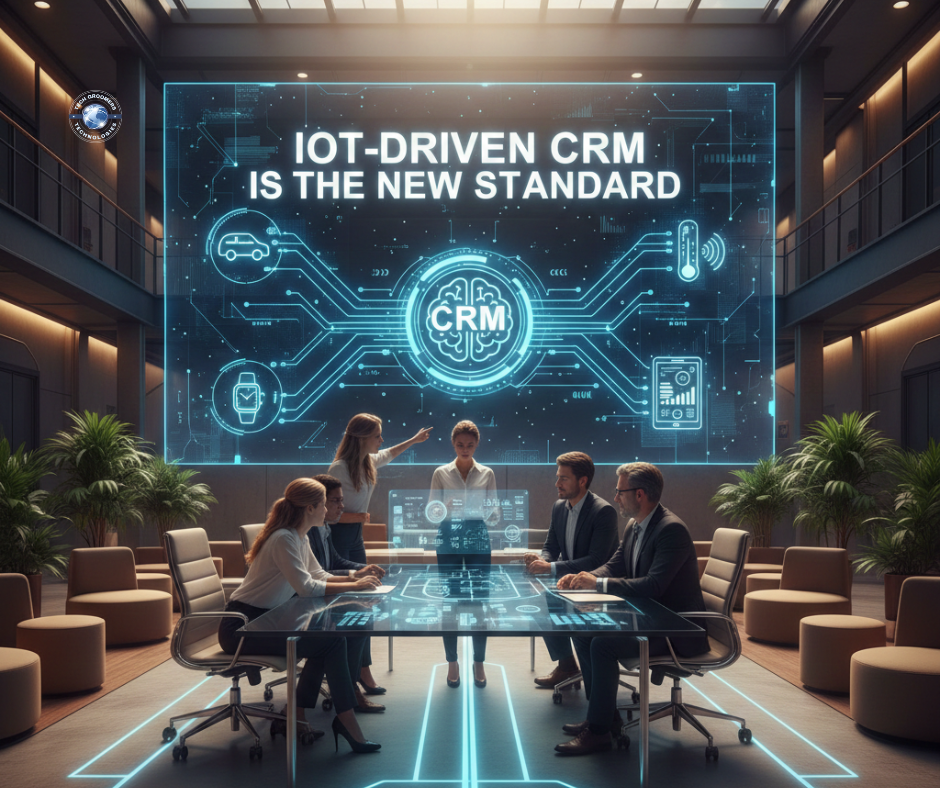
Future Outlook: IoT-Driven CRM Is the New Standard
As businesses move toward automation, personalization, and predictive operations, IoT-integrated CRMs will become standard rather than optional.
Future CRM systems will:
- Automatically respond to customer needs
- Trigger actions without human intervention
- Continuously learn from device data
- Act as intelligent business copilots
Companies that adopt this integration early will gain a significant competitive edge.
Conclusion
Integrating IoT with CRM transforms how businesses understand customers and products. By combining real-time device data with customer intelligence, companies can deliver proactive service, personalized experiences, and smarter decision-making.
In a data-driven future, IoT-powered CRM systems are not just an upgrade—they are a necessity for sustainable growth.

Leave a Reply