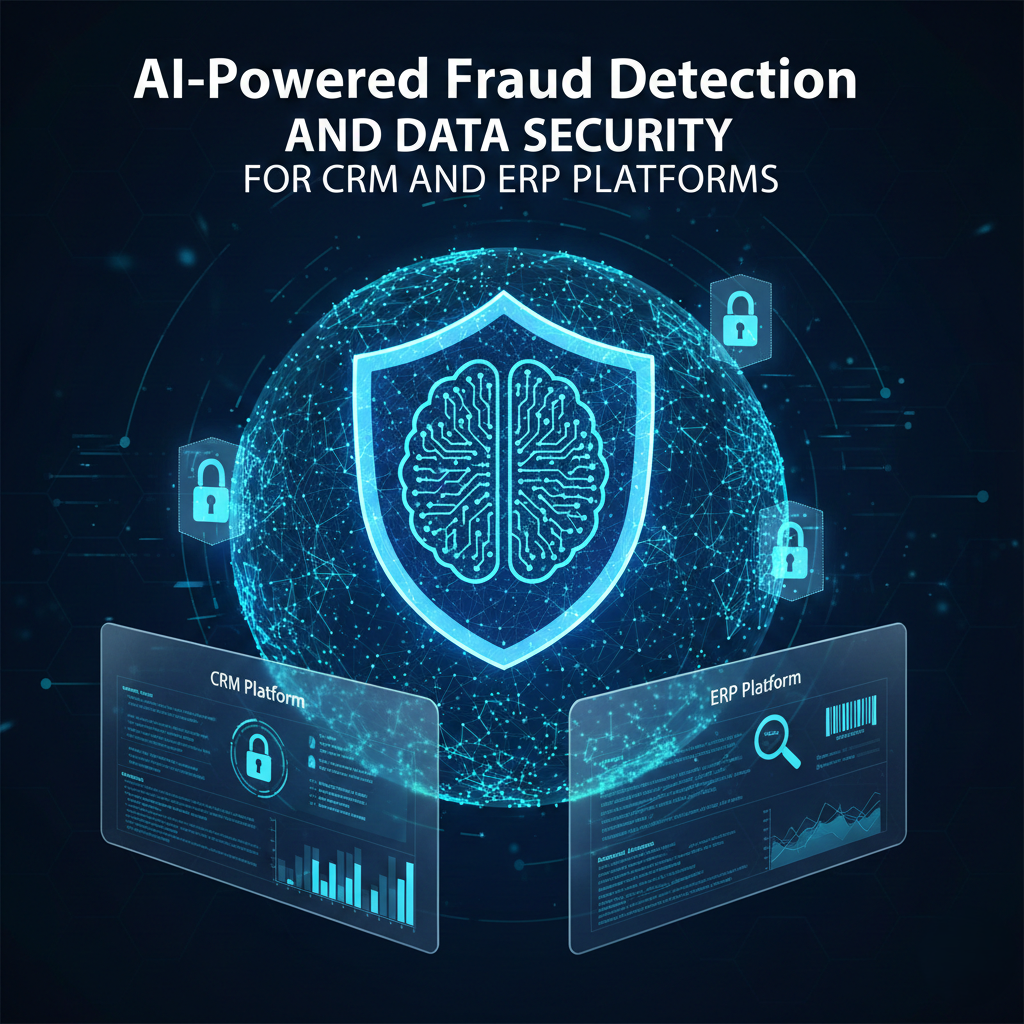

In the digital age, businesses rely heavily on CRM (Customer Relationship Management) and ERP (Enterprise Resource Planning) platforms to manage sensitive data, streamline operations, and optimize customer experiences. However, this reliance also makes them prime targets for cyberattacks, data breaches, and fraudulent activities.
Traditional security methods are no longer sufficient. Enter AI-powered fraud detection and data security systems—advanced technologies that leverage artificial intelligence and machine learning to protect businesses, their data, and their customers in real time.
In this blog, we’ll explore how AI strengthens CRM and ERP platforms against threats and ensures secure, reliable operations.
1. Why AI Is Crucial for CRM and ERP Security
CRMs and ERPs store highly sensitive information, including:
- Customer personal data (names, emails, phone numbers)
- Financial records (transactions, invoices)
- Supplier and partner details
- Sales performance and strategic insights
Traditional security systems often fail to detect sophisticated threats in real time. AI changes this by:
- Learning normal system behavior
- Detecting unusual patterns instantly
- Predicting potential fraud before it occurs
- Adapting to evolving cyber threats automatically
2. How AI Detects Fraud in Real Time
AI-driven platforms can analyze vast amounts of transactional and behavioral data across ERP and CRM systems. Key features include:
🔹 Pattern Recognition
AI identifies typical behavior for users, transactions, and workflows. Any deviation—like unusual logins, abnormal transaction amounts, or unexpected data access—is flagged instantly.
🔹 Anomaly Detection
Machine learning algorithms detect outliers, unusual activities, and suspicious access points that might indicate fraud.
🔹 Predictive Alerts
AI predicts high-risk activities and alerts security teams, allowing preemptive actions before any damage occurs.
3. Protecting Customer Data in CRM Platforms
CRMs manage personal and financial customer information. AI safeguards this data by:
- Monitoring for unauthorized access
- Detecting phishing or social engineering attempts
- Encrypting sensitive data automatically
- Tracking data flow across integrated applications
AI ensures that customer trust is maintained, which is critical for long-term relationships and compliance with regulations like GDPR or CCPA.
4. Securing ERP Systems Against Operational Risks
ERPs integrate multiple business processes, including finance, supply chain, HR, and inventory management. AI enhances ERP security by:
- Monitoring all transactions in real time
- Detecting internal fraud, like payroll manipulation or inventory mismanagement
- Preventing unauthorized modifications to financial records
- Ensuring compliance with industry regulations and audits
This helps businesses maintain operational integrity and avoid costly mistakes.
5. Benefits of AI-Powered Security in CRM and ERP
Investing in AI-driven security brings multiple advantages:
✅ Real-Time Threat Detection
AI identifies risks as they occur, preventing potential damage.
✅ Reduced Manual Monitoring
Automated monitoring reduces reliance on security teams, saving time and cost.
✅ Improved Accuracy
AI reduces false positives and focuses attention on genuine threats.
✅ Continuous Learning
Machine learning continuously adapts to new threats, improving over time.
✅ Compliance Assurance
AI helps maintain data protection standards and regulatory compliance.
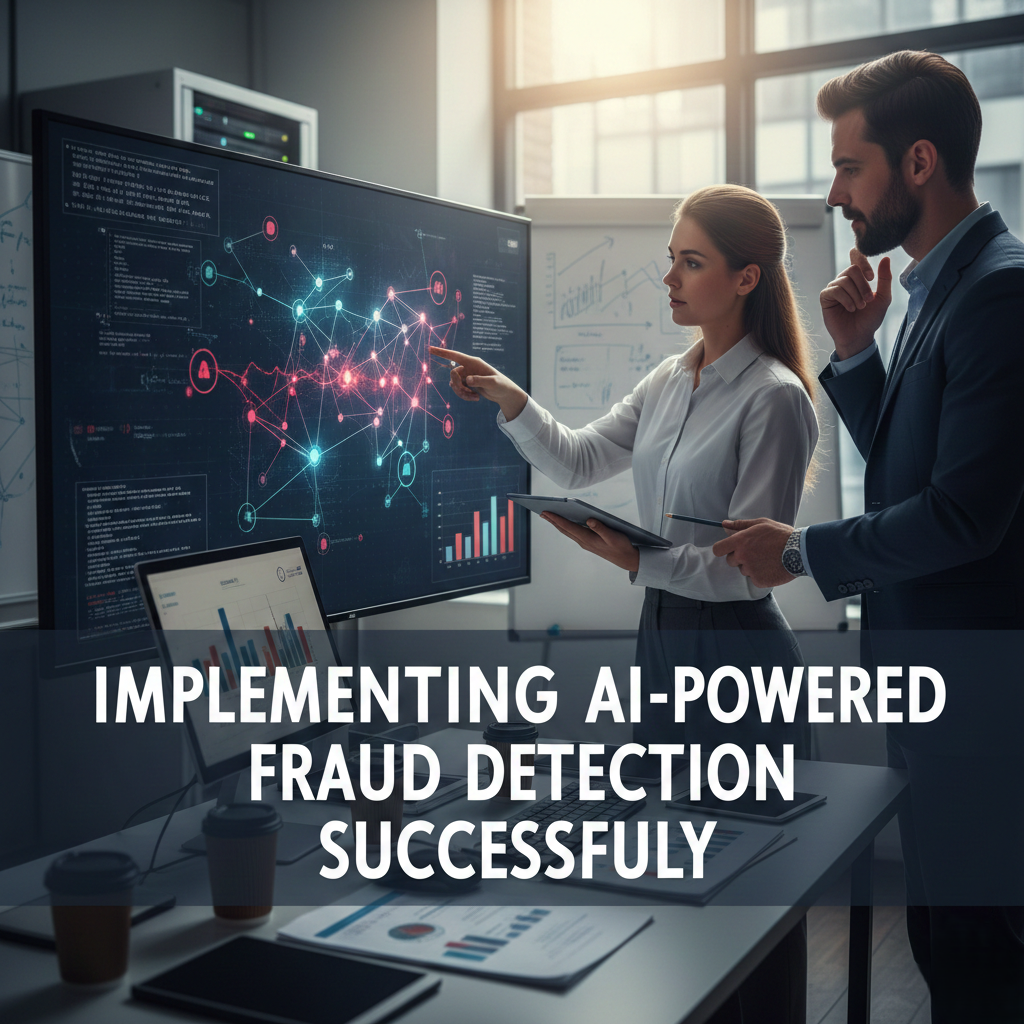
6. Implementing AI-Powered Fraud Detection Successfully
To maximize AI security in CRM and ERP platforms, businesses should:
- Integrate AI tools with existing CRM/ERP platforms – choose compatible AI-powered security modules.
- Map critical workflows and data points – focus AI monitoring on high-risk areas.
- Train AI systems using historical data – improve anomaly detection and pattern recognition.
- Set up real-time alerts and dashboards – enable immediate response to suspicious activity.
- Regularly audit AI performance – fine-tune algorithms for accuracy and adaptability.
7. Future of AI in CRM and ERP Security
The next few years will see AI evolving into fully autonomous security agents capable of:
- Predicting cyber threats before they occur
- Automating risk mitigation workflows
- Self-healing systems after attacks
- Coordinating across multiple business software platforms
Businesses that adopt AI-powered security early will enjoy a competitive edge—combining operational efficiency with robust protection.
Conclusion
AI-powered fraud detection and data security are no longer optional for businesses using CRM and ERP systems. With AI, organizations can:
- Protect sensitive customer and operational data
- Detect fraud in real time
- Automate threat response
- Ensure compliance with regulations
- Improve overall operational confidence
As cyber threats become increasingly sophisticated, AI-driven security is the future of safe, scalable, and efficient business operations.




Leave a Reply